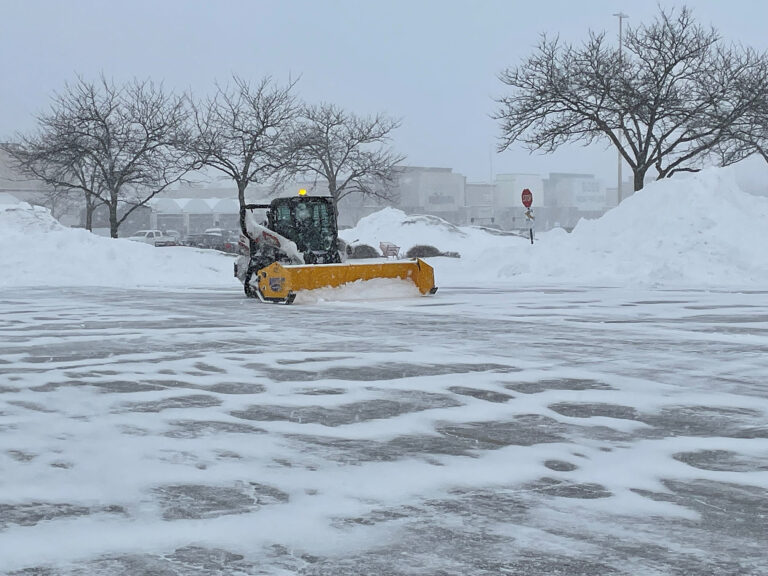

Salt is one important tool for creating safe facilities in the winter, but oversalting your property comes with several costs. Obviously, there is the necessary cost of your winter contractor, but there are also the repairs to fix salt damage to landscaping and infrastructure. In this blog, we’ll explore how applying excess salt is costing you extra and how to avoid it through Salt Smart Practices.
Too Much Salt Kills Landscaping
Winter road salt (sodium chloride) and other deicers can damage and kill landscaping. Dry road salt, especially when overapplied, tends to bounce off pavement and into the surrounding environment. As the salt dissolves into liquid, it also sprays upward as vehicles go by, often causing salt burn to nearby plants. Over time, salt accumulates in the soil and plants struggle to grow there.
Costs to replace salt-damaged turf grass, flower plantings, or trees and shrubs add up each year. Oversalting creates a need to replace landscaping more frequently since excess salt bounces or runs off into plants and soil. Alternatively, when winter maintenance contractors and businesses start incorporating Salt Smart Practices, they notice that their landscaping is healthier the rest of the year.


Too Much Salt Corrodes Infrastructure
Chloride-based deicers like road salt corrode and damage infrastructure—and that corrosion is sped up when salt is overapplied. Chlorides degrade metals, concrete, and asphalt. As snow and ice melts, the salty water works its way under the surface, and continued freezing and thawing results in damage like chipping, flaking, and pitting over time. Salt also causes metal to rust more quickly. Parking lots, sidewalks, doorways, hand rails, trash cans, lamp posts, and park benches are commonly corroded by caked on salt through the winter. To put it briefly, oversalting accelerates the corrosion of infrastructure, which unnecessarily shortens the lifespan of residential and commercial facilities.
Oversalting also means that facility users will track more salt into buildings. Now, inside infrastructure like entryways and flooring are at risk of corroding at a faster rate too. To avoid inside property damage and maintain a tidy interior, janitorial costs increase to clean up excess salt.


Salt Smart Practices Use the Right Amount of Salt for Safe Surfaces
Salt Smart Practices are industry-accepted best practices for snow and ice management. These practices provide safe surfaces, use less salt, and reduce damage to your property and the environment. Proper planning and training, calibration, liquids, and advanced weather forecasting, allow Salt Smart winter professionals to work more efficiently and use less salt to create safe surfaces. These professionals consider the specific circumstances of the storm and facility to make decisions about what materials and techniques to use. As opposed to blanketing surfaces with salt for each storm, intentional winter maintenance results in safe surfaces using the right amount of salt for each situation. Safety is maintained, or often even improved, when applying Salt Smart Practices.

Be a Salt Smart Business
Avoid the costly consequences of oversalting your property next winter. Talk with your contractor about working Salt Smart Practices into your service contract. With Salt Smart Practices, you’ll maintain or improve safety while preventing salt waste and unnecessary damage to your landscaping and infrastructure.
To learn more, read our guide on snow and ice management for property managers.